Settling Your Baby Into Nursery: First Weeks Made Easier
The cot is built, the tiny coat is hanging by the door — and now there’s a date circled on the calendar for your baby’s first day at nursery. Deep breath. Most parents find the run-up harder than their baby does, and the difference between a teary fortnight and a smoother one usually comes down to what you do in the weeks before, not on the morning itself.
One thing first: this guide is about the childcare kind of nursery — settling-in sessions, comfort objects, the goodbye at the door. If you’re here to plan the cot-and-curtains kind, you want our guide to preparing the perfect baby nursery instead.
Use settling-in sessions properly
Most UK nurseries offer taster sessions before the official start date, and they’re worth every minute. Stay in the room for the first one so your baby can explore with you as a safe base. Next time, pop out for twenty minutes. Then an hour. Each short separation teaches the same quiet lesson: this place is fine, and you always come back.
Use those visits to get to know your baby’s key person, too. Tell them how your baby likes to fall asleep, what feeds look like at home, which words you use when they’re upset. The more of home they can recreate, the faster your baby relaxes.
Choose a comfort object weeks ahead, not on day one
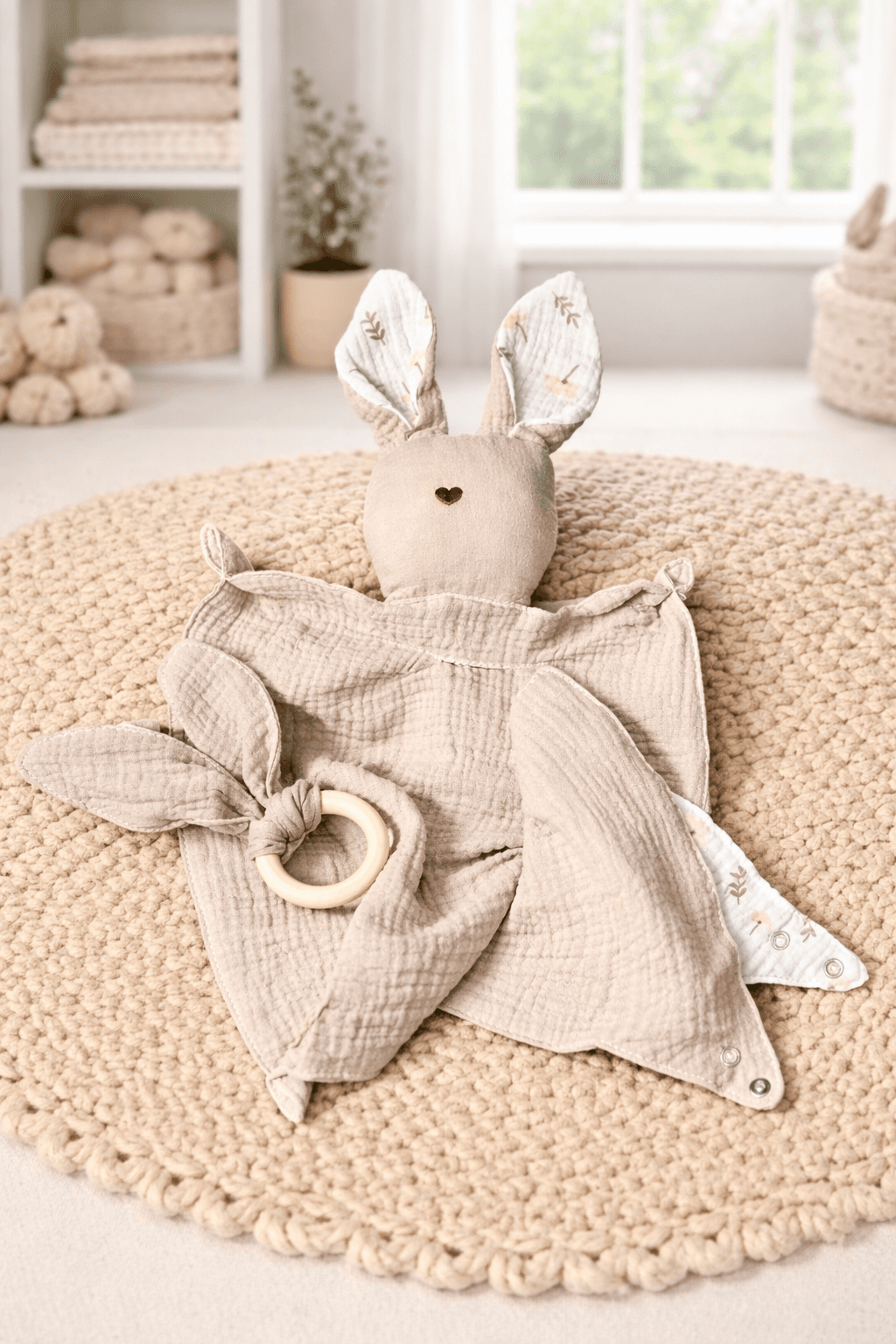
Familiar smell and texture do an enormous amount of the settling work. A muslin comforter or small teddy that has lived in the cot for a few weeks carries home with it into an unfamiliar room. Pick it early, let it soak up everyday life, and if you can, keep an identical spare — one for nursery, one for home, swapped regularly so both smell right and a lost one never becomes a catastrophe.
If it seems odd that a plain square of cotton can outperform every light-up gadget you own, we’ve written about why babies love cotton muslins — the short version is soft, breathable, and it smells of you.
Nudge the daily rhythm before you have to
Ask the nursery for their typical day — when the children nap, eat and head outside — and start drifting your home routine towards it a couple of weeks early. Fifteen minutes at a time is plenty. A baby who already naps at roughly nursery o’clock has one less new thing to cope with on the first morning.
Keep the goodbye short, warm and identical
This is the hardest part, so decide your script in advance. Same words, same kiss, same wave — then go. Lingering, or worse, slipping away without saying goodbye, tends to make the next drop-off harder, because your baby learns to watch you like a hawk. A quick, confident goodbye says there’s nothing here to worry about. Crying in the car afterwards is allowed. Practically traditional, in fact.
What’s normal in the first fortnight
Expect some wobble: clingier evenings, shorter naps, a baby who is suddenly very keen on being held. Nursery days are busy and noisy, and small people come home tired. Keep evenings low-key, bring bedtime forward if you need to, and ask the key person how long the tears last after you leave — often it’s minutes, not mornings. If something still feels off after a few weeks, say so. A good nursery will adjust with you.
Mark the milestone — it’s bigger than it looks
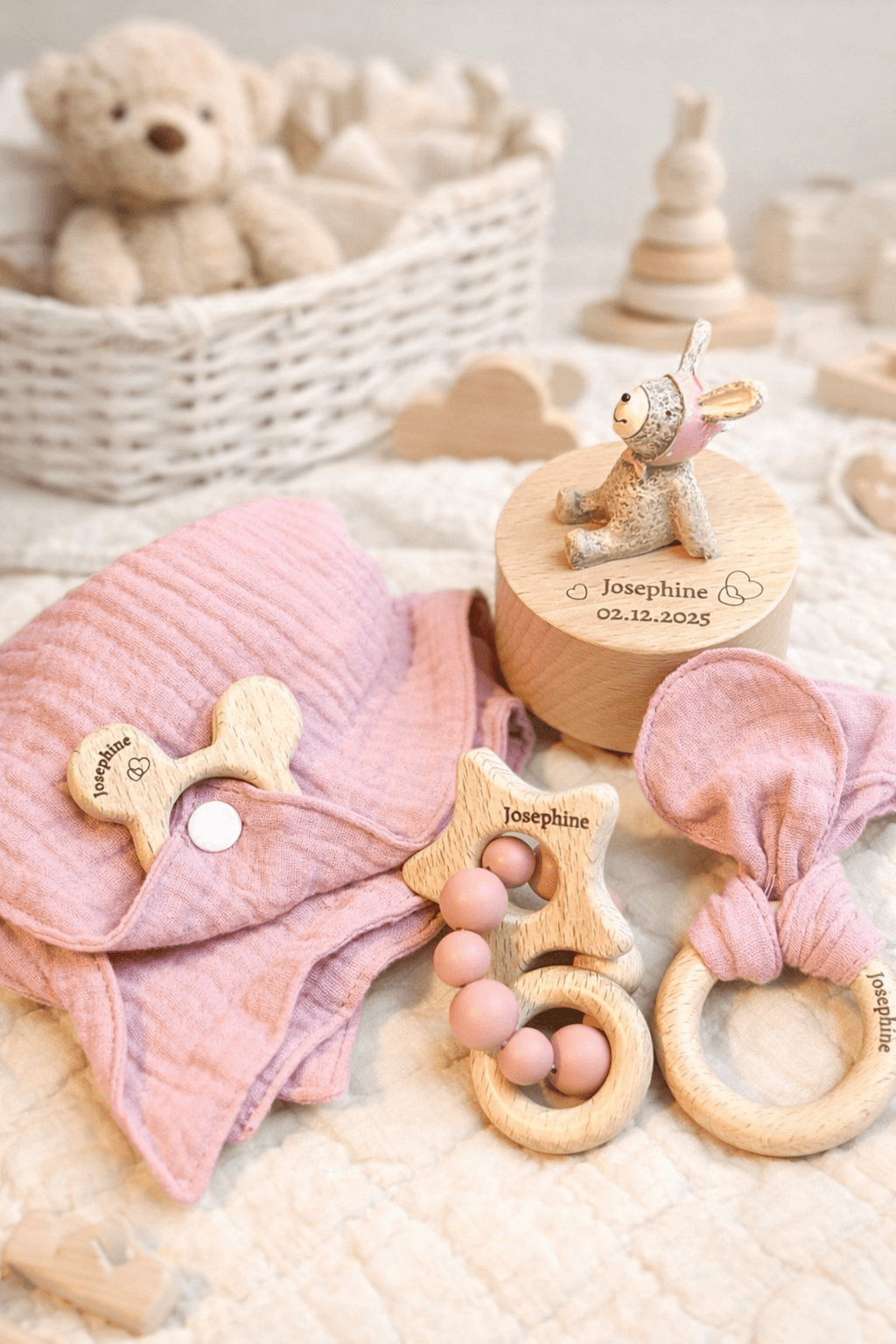
The first day at nursery tends to vanish into a blur of name labels and packed bags, and it deserves better. Take the photo by the front door. Keep the little card from their peg. And if you’d like somewhere lovely for it all to live, you can build a personalised baby gift box — a crib-shaped wooden keepsake box in pink, blue or neutral, filled with pieces you choose yourself. A muslin comforter from our Snuggle Squad range can become the nursery comfort object, and an engraved wooden toy can carry the date it all began. Boxes start at £32 for the Small, with the Medium at £57 and the Large at £80.50, contents included.
Your baby won’t remember their first day at nursery. You will — and one day, keepsake box in hand, you’ll get to show them.
Looking for the perfect baby gift?
Choose a box colour and size, fill it with handpicked keepsakes and add free personalisation.
Build your own baby gift boxMore from the Journal
More Articles →
Travelling with Toddlers: What to Pack for an Easier Trip
Travelling with a toddler rarely feels like a break — but the right packing helps. Honest tips on comfort items, muslins and screen-free entertainment.
Why Babies Love Cotton Muslins (And How to Gift Them)
Soft, breathable and endlessly useful — discover why cotton muslins become a baby's favourite, and how to build them into a personalised gift box.

How to Spend Quality Time with Your Baby: Simple Ideas
Simple, realistic ways to spend quality time with your baby — everyday play, tiny rituals and keepsakes that turn ordinary days into lasting memories.