Why Personalised Baby Gifts Mean So Much: The Psychology
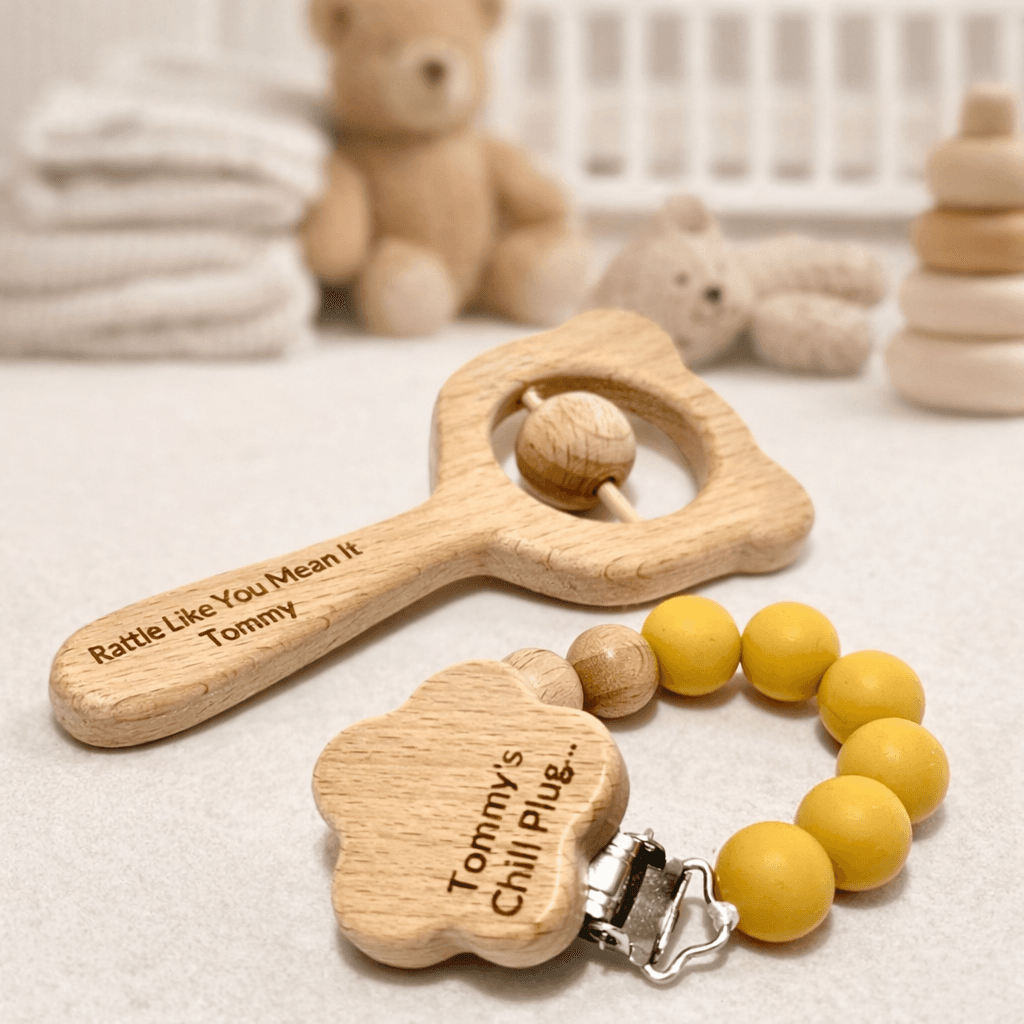
Hand a new parent a gift with their baby’s name on it and watch their face. Something shifts. It’s the same teddy, the same muslin, the same wooden toy — yet the moment it carries a name, it stops being a product and starts being theirs. That reaction isn’t sentimentality for its own sake. There are real psychological reasons why personalised baby gifts land differently, and understanding them makes you a much better gift-giver.
A name changes how we value things
We’re wired to care more about things connected to our identity. Our own name is one of the first words we learn to recognise, and we never stop responding to it. Put a baby’s name on an object and the parents no longer see a generic item — they see their child reflected back at them. The gift becomes a small statement: this child exists, and someone marked the occasion.
That’s also why a personalised gift can’t be regifted, returned or quietly forgotten in a drawer. It has one owner, permanently. Generic gifts are interchangeable; personalised ones are not. Scarcity of that kind — a thing that exists for exactly one person — is something we instinctively treasure.
Effort is the real message
Gift-giving is a form of communication, and what a gift communicates most clearly is effort. A voucher says “I remembered.” A personalised gift says “I planned, I chose, I thought about you specifically.” Choosing the engraving, picking the colour, deciding what goes in the box — every decision you make is legible to the person receiving it.
New parents are especially receptive to this. The newborn weeks are exhausting and strangely isolating, and a gift that clearly took thought tells them someone was paying attention. The object matters less than what it proves.
Objects become memory anchors
Psychologists talk about how strongly memory attaches itself to physical things — a smell, a texture, a melody can pull a whole period of life back into focus. Baby items are unusually good at this because the stage they belong to is so short. The tiny hooded towel, the comforter that went everywhere, the wind-up music box played at every bedtime: years later, these objects don’t just remind parents of that time, they are that time.
This is why so many of us can still picture our first soft toy in precise detail. If you’re curious how deep that attachment runs, we’ve written about it in do we remember our first soft toy forever? — spoiler: mostly, yes. A personalised gift simply gives that natural attachment a head start, because the object arrives already carrying a story.
Why sound and touch make it stronger
The most powerful keepsakes engage more than the eyes. A wooden wind-up music box — like the teddy music box from our Memory & Melody range — pairs an engraved name with a melody the baby hears night after night. Wooden toys and engraved pieces age visibly, gathering the small marks of being loved. Soft things hold their texture in memory. When you’re choosing a personalised gift, favour items that will be handled, heard and worn in, not just displayed.
Putting the psychology into practice
If effort, identity and memory are what make a gift meaningful, the logical conclusion is to build the gift yourself rather than buy something pre-assembled. That’s exactly what our configurator is for: you can build a personalised baby gift box around a crib-shaped keepsake box in pink, blue or neutral, choosing each item, its colour, and engraving on the wooden pieces. Boxes come in three sizes — Small at £32, Medium at £57 and Large at £80.50, contents included — and the box itself is designed to be kept long after the contents are outgrown.
One honest note: personalisation isn’t magic dust. An engraved version of something useless is still useless. The gifts that stay in a family combine meaning with genuine everyday usefulness — we’ve gone deeper on that balance in turning baby essentials into keepsakes.
So next time you’re stuck choosing between something safe and something personal, remember what the psychology says. Nobody’s first soft toy was a gift card.
Looking for the perfect baby gift?
Choose a box colour and size, fill it with handpicked keepsakes and add free personalisation.
Build your own baby gift boxMore from the Journal
More Articles →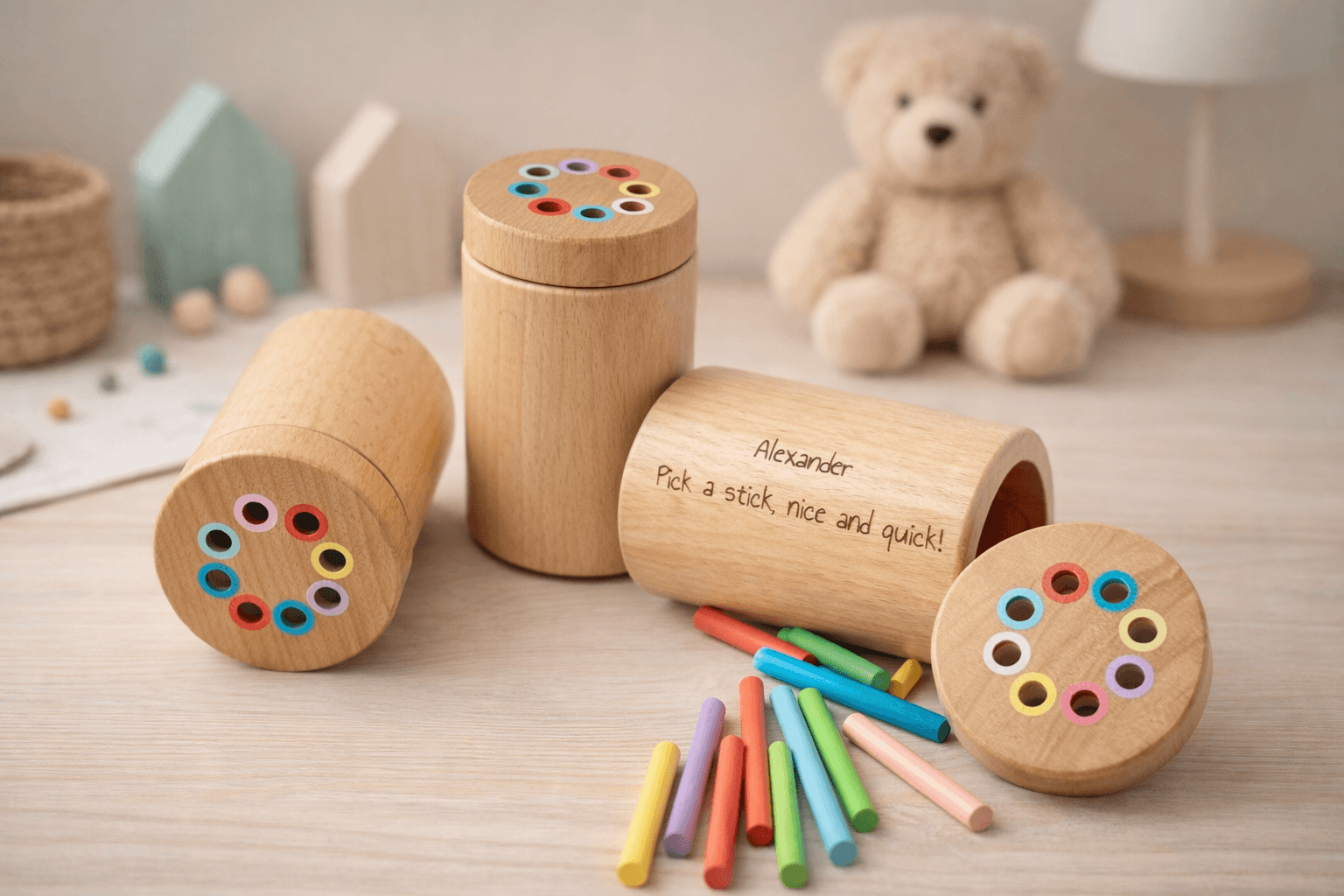
Engraved Wooden Baby Gifts: Keepsakes That Actually Last
Engraved wooden baby gifts turn everyday toys into keepsakes. What to engrave, which items suit it best, and how to build a gift box around one.
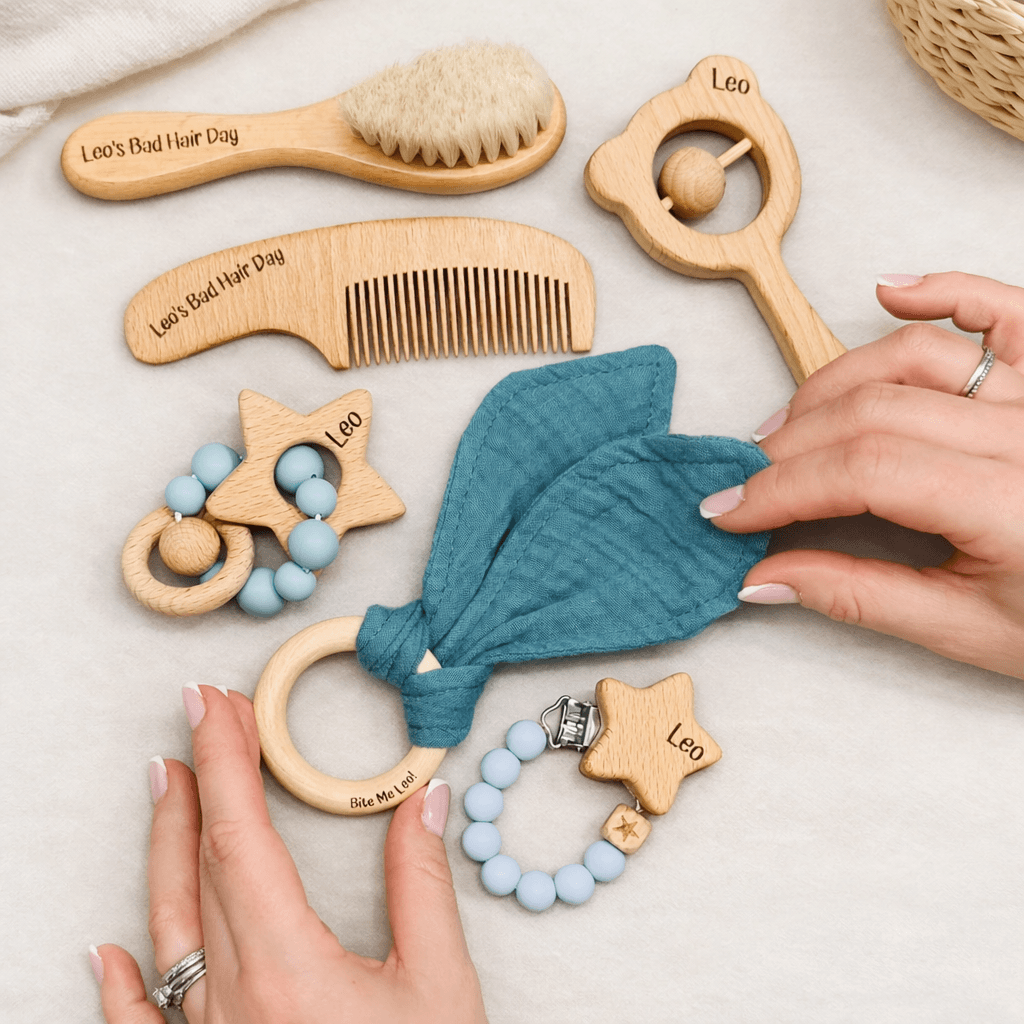
Personalised Baby Gift Boxes: Engraving & Colour Guide
Make a baby gift truly theirs: what to engrave, how to pick colours, and which items become keepsakes — a practical guide to personalised baby gift boxes.
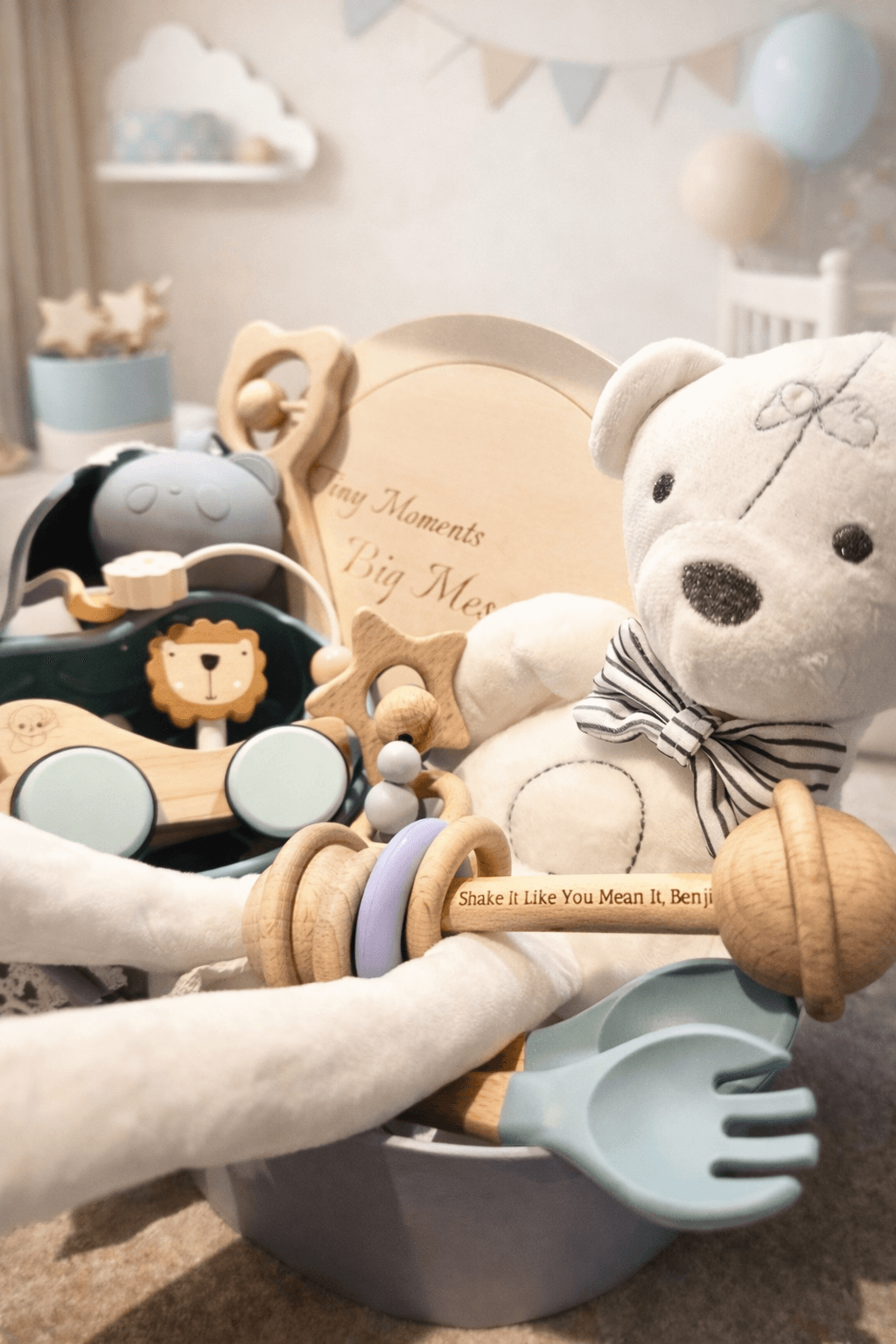
10 Keepsake Baby Gifts That Last Beyond Babyhood
Ten keepsake baby gifts that outlast the newborn stage — engraved wooden toys, music boxes and comforters — and how to gather them in one box.