How to Keep Your Baby Entertained Without Screens
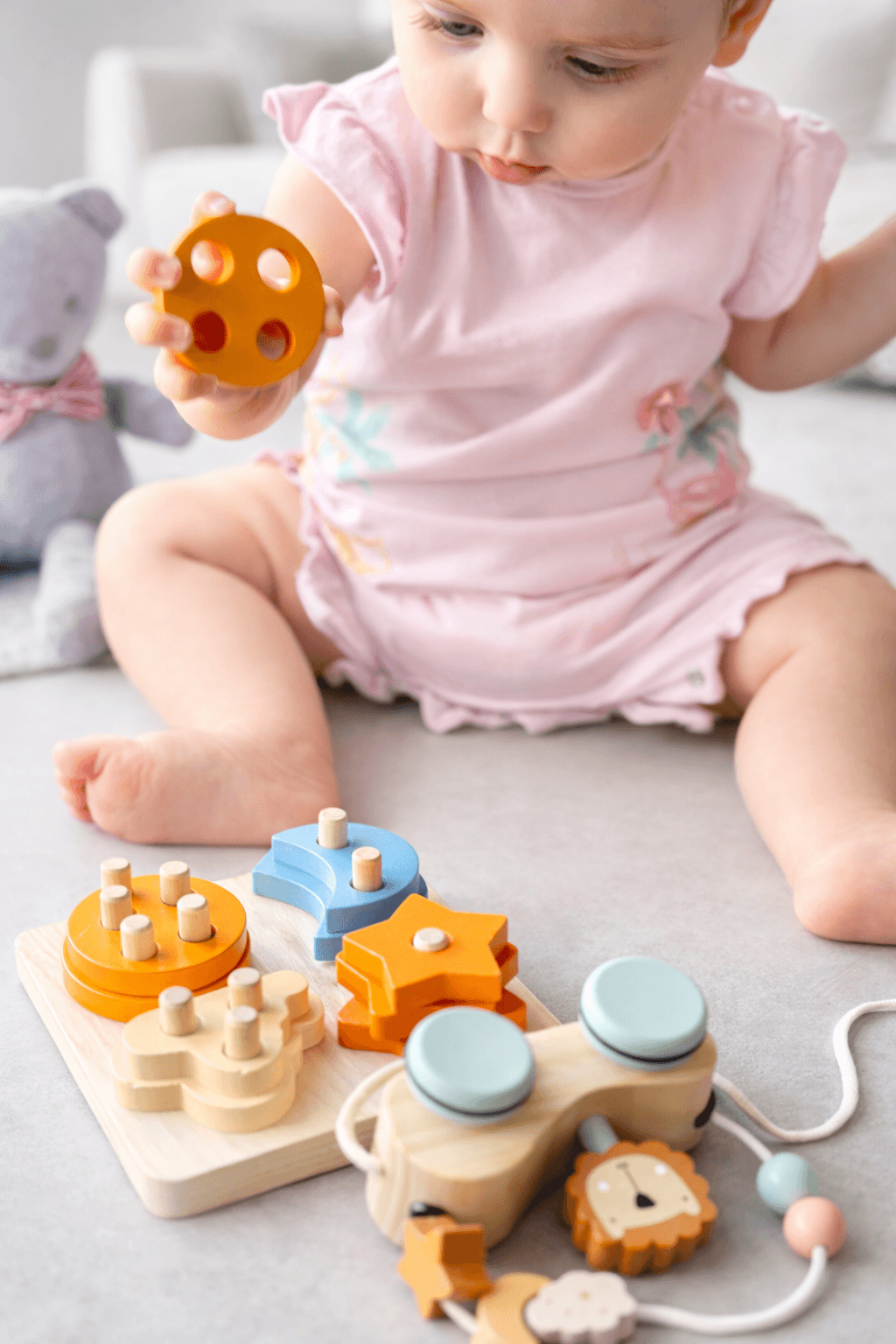
Somewhere around the third rainy afternoon in a row, handing over a phone starts to look very reasonable. No judgement — every parent has stood in that kitchen. But here’s the reassuring bit: babies are remarkably easy to entertain without a screen. They don’t need apps or episodes. They need textures, sounds, faces, and a bit of variety. Most of it you already have at home.
Start with their senses
For the first year, play is mostly investigation. A baby handed a soft muslin cloth will study it like a scientist — scrunching it, mouthing it, dragging it over their face for the world’s slowest game of peekaboo. Crinkly fabrics, smooth wood, a hooded towel fresh from the wash: each texture is genuinely new to them, which is something no screen can offer.
Build a little basket of safe, contrasting objects and let your baby dig through it on the floor. Swap the contents every few days. If you want the full case for why muslins in particular earn their place, we’ve written about why babies love cotton muslins — short version: soft, washable, endlessly reusable.
Wooden toys that earn their keep
The best baby toys tend to be the quietest ones. A simple wooden toy like Pick A Stick gives a baby something to grip, stack, knock over and mouth — and later becomes a proper game as they grow into it. Because there’s no “right” way to play with it, it holds attention far longer than a toy that sings the same song on loop.
Open-ended toys also make life easier for you. One good wooden toy on the play mat invites exploration; a heap of flashing plastic mostly invites overwhelm.
Music, minus the tablet
Babies adore music, and the low-tech versions are the ones that stick. Sing to them — badly, if that’s what you’ve got. Clap rhythms and wait for them to react. A wooden wind-up music box is lovely here too: wind it, let the melody play out, watch your baby go still and listen. It becomes a cue for calm, which is exactly what you want at the frazzled end of the day.
The winding itself becomes part of the ritual. Long before they can speak, many babies will hand the box back to you, which is their way of saying “again”.
Rotate the toys, keep the interest
Babies don’t need lots of toys — they need the feeling of novelty. Keep three or four things within reach and box up the rest. Every few days, swap them round. The teddy that was ignored on Tuesday is fascinating again by Saturday, and you haven’t spent a penny.
This is also the kindest advice to pass on to anyone asking what to buy for your baby: fewer, better things beat a mountain of plastic every time.
You’re the main attraction
It’s easy to forget, mid-laundry, that you are your baby’s favourite entertainment. Peekaboo. Narrating the shopping as you unpack it. Pulling faces until they laugh. None of it needs planning, and all of it does more for language and bonding than any app claims to. If you’d like more low-effort ideas, our post on simple ways to spend quality time with your baby is full of them.
On the hard days, lower the bar. Eye contact and a chat while the kettle boils counts. It all counts.
Put together a screen-free play kit
If you’re gifting — or stocking your own shelves — it helps to think in kits rather than single items. A muslin comforter for touch, a wooden toy for problem-solving, a music box for wind-down, a teddy for company: together they cover a whole afternoon of screen-free play.
That’s exactly how our boxes work. You can build your own baby gift box by choosing a size, then filling the crib-shaped keepsake box with pieces from our sensory, snuggle, play and music ranges — with engraving on the wooden items if you’d like to make it personal. The box itself sticks around long after the playing is done, holding first shoes, hospital bands and all the other small things you’ll want to keep.
No screens required. Just a baby, a basket of interesting things, and you.
Looking for the perfect baby gift?
Choose a box colour and size, fill it with handpicked keepsakes and add free personalisation.
Build your own baby gift boxMore from the Journal
More Articles →
How to Spend Quality Time with Your Baby: Simple Ideas
Simple, realistic ways to spend quality time with your baby — everyday play, tiny rituals and keepsakes that turn ordinary days into lasting memories.

Travelling with Toddlers: What to Pack for an Easier Trip
Travelling with a toddler rarely feels like a break — but the right packing helps. Honest tips on comfort items, muslins and screen-free entertainment.
Which Teething Ring Is Best for Your Baby? A Parent's Guide
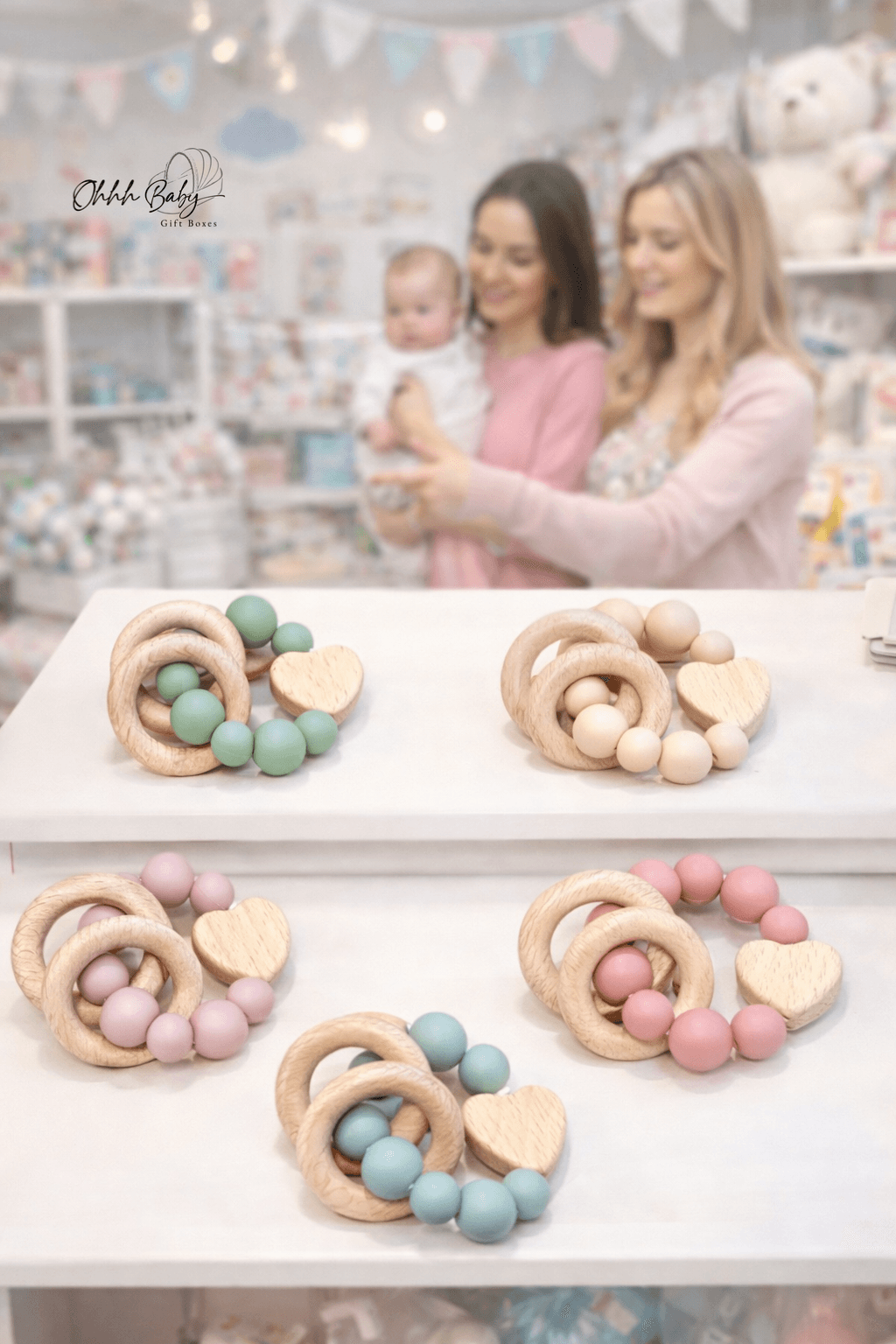
How to choose a safe, soothing teething ring for your baby — materials, shapes and cleaning tips — plus how to pair it in a personalised baby gift box.