Which Teething Ring Is Best for Your Baby? A Parent's Guide
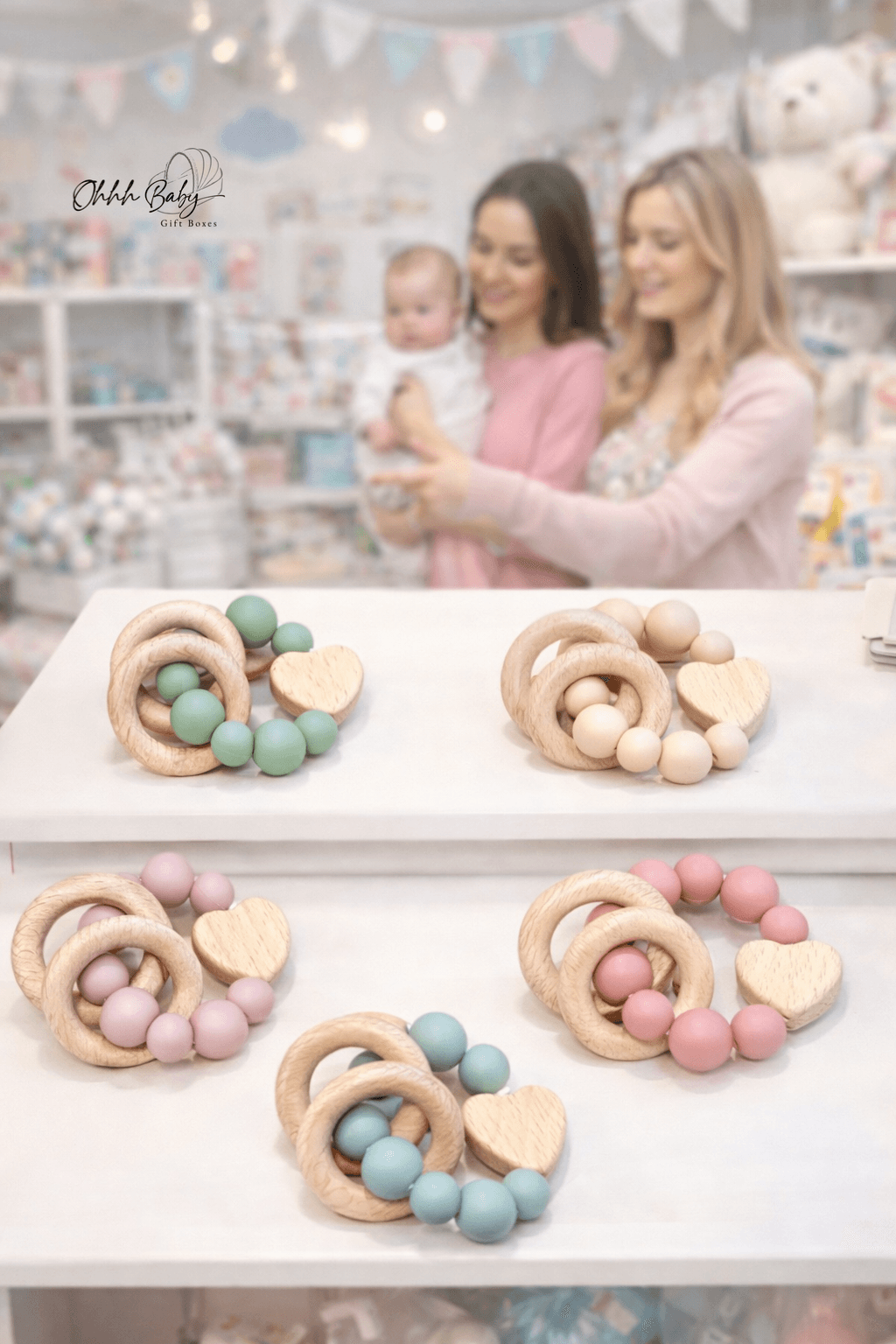
Somewhere around the half-year mark, most babies discover their gums — and promptly try to chew their way through everything within reach. Sleeves, spoons, your finger. Teething is uncomfortable, it can drag on for months, and a good teething ring is one of the few things that genuinely helps. But stand in front of a shelf of them and the choice is baffling. Wood or silicone? Ring or textured shape? Here is how to pick one your baby will actually use.
How to tell teething has started
Every baby runs on their own timetable, but the signs tend to look similar: more drool than usual, flushed cheeks, a sudden urge to gnaw on anything solid, and a grumpier little person than you had the week before. You might spot a swollen patch of gum where a tooth is pushing through. None of it is pleasant, which is exactly why a teether earns its keep — it gives sore gums something safe and satisfying to press against.
What actually makes a good teething ring
Ignore the novelty shapes for a moment. The things worth checking are simple:
- Safe materials. Look for untreated natural wood or food-grade, BPA-free silicone. It is going in a mouth for hours a day, so the material matters more than anything else.
- A shape small hands can hold. A ring with an open centre is easiest for a baby to grip and pass between hands — which is half the entertainment.
- Some texture. Ridges, beads or a firm edge give gums something to work against. Perfectly smooth teethers often get abandoned.
- Easy cleaning. If it cannot be wiped down or washed quickly, it will spend more time drying than being used.
Wooden or silicone?
This is the question parents ask most, and honestly there is no wrong answer — the two do slightly different jobs.
Wooden teethers are firm, which is what a baby wants when a tooth is really pushing. They are durable, they feel lovely in the hand, and a well-made one can outlast the teething stage entirely and become a keepsake. Wood also takes engraving beautifully — a name or date turns a chew toy into something worth holding onto.
Silicone teethers are softer and more forgiving, better for the very early gnawing stage before teeth appear. They flex, they clean easily, and many can go in the fridge for a cooling effect that soothes inflamed gums.
Plenty of parents keep one of each in rotation. What comforts a baby on Monday is often rejected by Thursday, so having options is a quiet act of self-defence.
Wooden vs silicone at a glance
| Feature | Wooden | Silicone |
|---|---|---|
| Feel | Firm | Softer, flexes |
| Best stage | A tooth pushing through | Early gnawing, before teeth |
| Extras | Durable, can be engraved | Cleans easily, many can be chilled |
| After teething | Can become a keepsake | Not mentioned in the guide |
A quick way to decide:
- If teeth have not appeared yet, or sore gums need something cool, choose silicone and pop it in the fridge.
- If a tooth is really pushing through, choose wooden, as the firmer surface gives gums more to press against.
- If you are buying a gift, choose a wooden ring engraved with a name or date and build it into a gift box.
Pairing a teether with the rest of a baby gift
A teething ring on its own is a small present. Alongside the right companions, it becomes the practical heart of a really good one. Things that pair naturally with a teether:
- A muslin comforter — for the drool, mostly, but also because babies form fierce attachments to them. We have written before about why babies love cotton muslins.
- A dummy clip, so the teether or dummy is not launched onto the floor forty times a day.
- A wooden toy like Pick A Stick, which grows with the baby once the chewing phase passes.
- A soft teddy for comfort at nap time, when sore gums make settling harder.
If you are buying for someone else and not sure what they already own, our guide to what new parents actually need is a sensible place to start.
Turning it into a gift worth keeping
This is where we come in. At Ohhh Baby you can build your own baby gift box: pick a crib-shaped keepsake box in pink, blue or neutral, then fill it from our ranges — Tiny Tot Essentials, Snuggle Squad, Keep Me Busy and Memory & Melody. Boxes start at £32 for the Small, with Medium at £57 and Large at £80.50, contents included. Wooden items can be engraved, and you choose the colour of each piece, so the whole box feels chosen rather than grabbed off a shelf.
The teething stage passes faster than it feels like it will. The right teether makes it kinder on everyone — and tucked into a box the parents will keep long after the last tooth arrives, it makes a lovely gift too.
Looking for the perfect baby gift?
Choose a box colour and size, fill it with handpicked keepsakes and add free personalisation.
Build your own baby gift boxMore from the Journal
More Articles →
How to Keep Your Baby Entertained Without Screens
Simple screen-free ways to keep your baby entertained — sensory play, music, toy rotation and everyday games that build real bonds, no tablet needed.

How to Spend Quality Time with Your Baby: Simple Ideas
Simple, realistic ways to spend quality time with your baby — everyday play, tiny rituals and keepsakes that turn ordinary days into lasting memories.

Travelling with Toddlers: What to Pack for an Easier Trip
Travelling with a toddler rarely feels like a break — but the right packing helps. Honest tips on comfort items, muslins and screen-free entertainment.