Maternity Leave in the UK: What to Expect and How to Plan
Maternity leave has a strange double life. On paper it’s a set of dates, forms and acronyms; in reality it’s the biggest change of routine you’ll ever make. Here’s what you’re actually entitled to in the UK, the deadlines worth putting in your diary, and a bit of honesty about what those first months at home really feel like.
How much maternity leave you can take
If you’re an employee, you’re entitled to up to 52 weeks of statutory maternity leave — 26 weeks of ordinary leave followed by 26 weeks of additional leave. You don’t have to take the full year, but you must take at least two weeks off after the birth (four if you work in a factory).
Your leave can begin up to 11 weeks before your due date. It also starts automatically if your baby arrives early, or if you’re off work with a pregnancy-related illness in the four weeks before you’re due.
Maternity pay, briefly
Statutory Maternity Pay runs for up to 39 weeks if you qualify: 90% of your average weekly earnings for the first six weeks, then a flat weekly rate (or 90% of your earnings, if that’s lower) for the remaining 33. The flat rate changes every April, so check GOV.UK for the current figure rather than trusting an old blog post — including this one.
Two things catch people out. First, the final 13 weeks of a full year’s leave are usually unpaid, which matters when you’re deciding how long to take. Second, if you don’t qualify for SMP — perhaps you’re self-employed or recently changed jobs — you may still be able to claim Maternity Allowance instead.
Dates and paperwork to sort early
- Tell your employer you’re pregnant by the 15th week before your due date, along with when you’d like your leave to start.
- Pass on your MAT B1 certificate — your midwife issues it from around week 20.
- Want to change your start date later? Give 28 days’ notice where you can.
- You can work up to 10 “keeping in touch” (KIT) days during leave without ending it — useful for training sessions or the odd team day, and entirely optional.
What the first months actually feel like
Nobody puts this on the HR intranet: a surprising amount of maternity leave happens at 3am. The days blur, the washing multiplies, and you can feel proudly capable and completely at sea within the same hour. That’s normal. The magical moments are real too — the first proper smile, the nap on your chest — they just arrive unscheduled, in between the chaos.
So be kind to yourself about the plans that slip. Lowering the bar for a few months isn’t failing at maternity leave; it is maternity leave.
Setting up home before leave starts
Those last pre-baby weeks are the best time to get organised, while you still have two free hands. Keep a small basket of daily essentials wherever you spend the most time — muslins, a comforter, feeding bits — so you’re not trekking upstairs mid-feed. If you’re not sure what’s genuinely worth buying, our newborn essentials checklist cuts the list down to what you’ll actually use.
If you’re buying for someone starting maternity leave
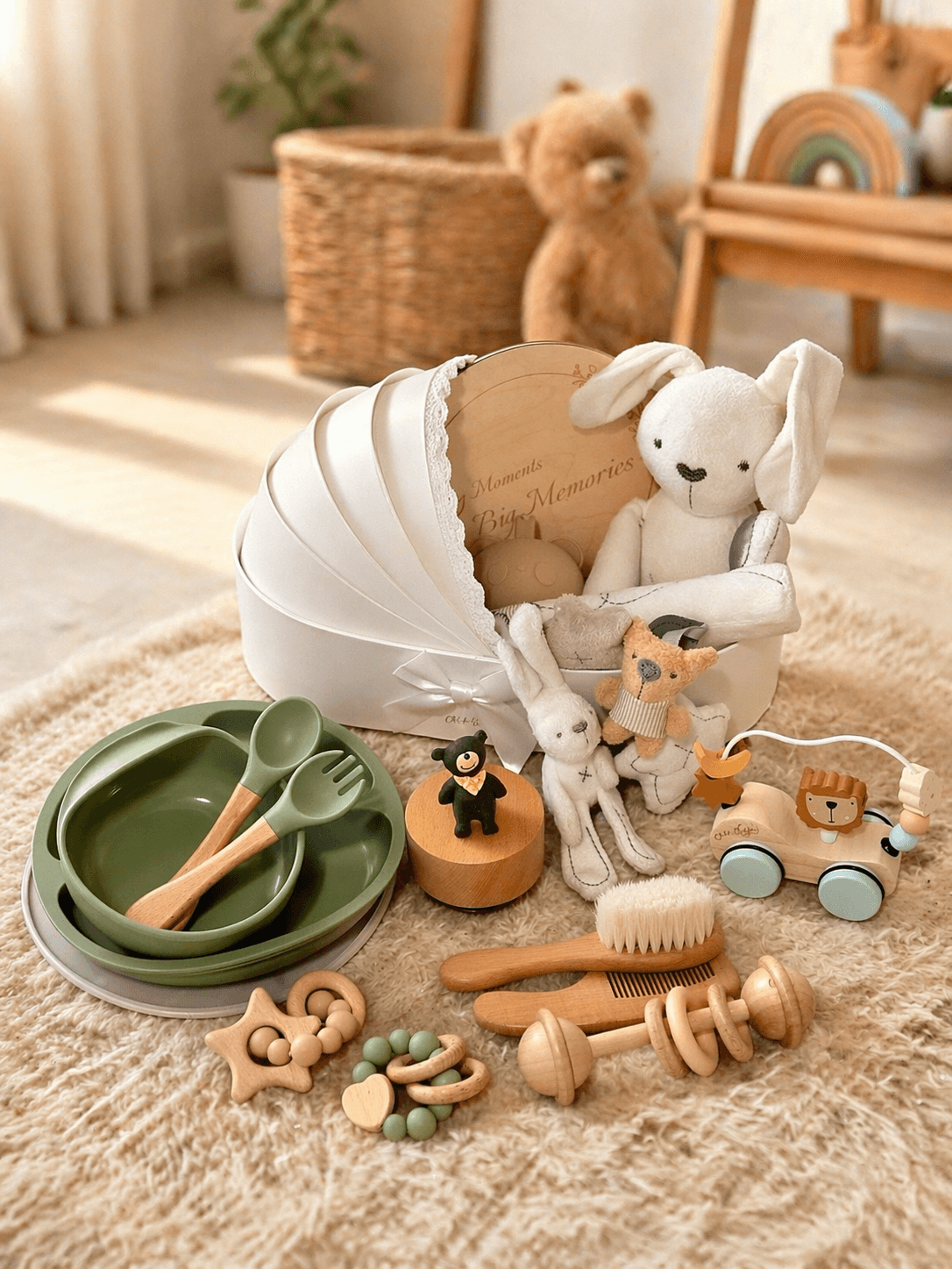
Colleagues often ask what to give a mum-to-be heading off on leave, and the honest answer is: useful things, beautifully presented. At Ohhh Baby you can build your own baby gift box — a crib-shaped keepsake box in pink, blue or neutral that you fill yourself: hooded towels and feeding sets, muslin comforters and teddies, wooden toys, or a wind-up wooden music box that can be engraved with baby’s name. Boxes start at £32 for a Small, with Medium at £57 and Large at £80.50, and UK delivery is free over £80.
We’ve written more about why this works so well as a leaving-for-leave present in our guide to the perfect maternity leave gift.
However you spend the next year — every week of it or just a few months — know your dates, sort the paperwork early, and leave plenty of room for the 3am moments. They’re the ones you’ll remember.
Looking for the perfect baby gift?
Choose a box colour and size, fill it with handpicked keepsakes and add free personalisation.
Build your own baby gift boxMore from the Journal
More Articles →
Hospital Bag Checklist UK: What to Pack for Mum & Baby
Free UK hospital bag checklist for mum and baby: what to pack, when to pack it, and the maternity essentials most parents forget.
Newborn Essentials Checklist UK: What You Really Need
A realistic newborn essentials checklist for UK parents — clothing, muslins, feeding and soothing basics, plus a thoughtful way to gift them all.
Can You Ever Really Be Ready for Parenting? An Honest Take
Nobody feels fully ready for a first baby — and that's fine. Here's what honest preparation looks like, and small ways to feel steadier before the birth.